 Skip to content

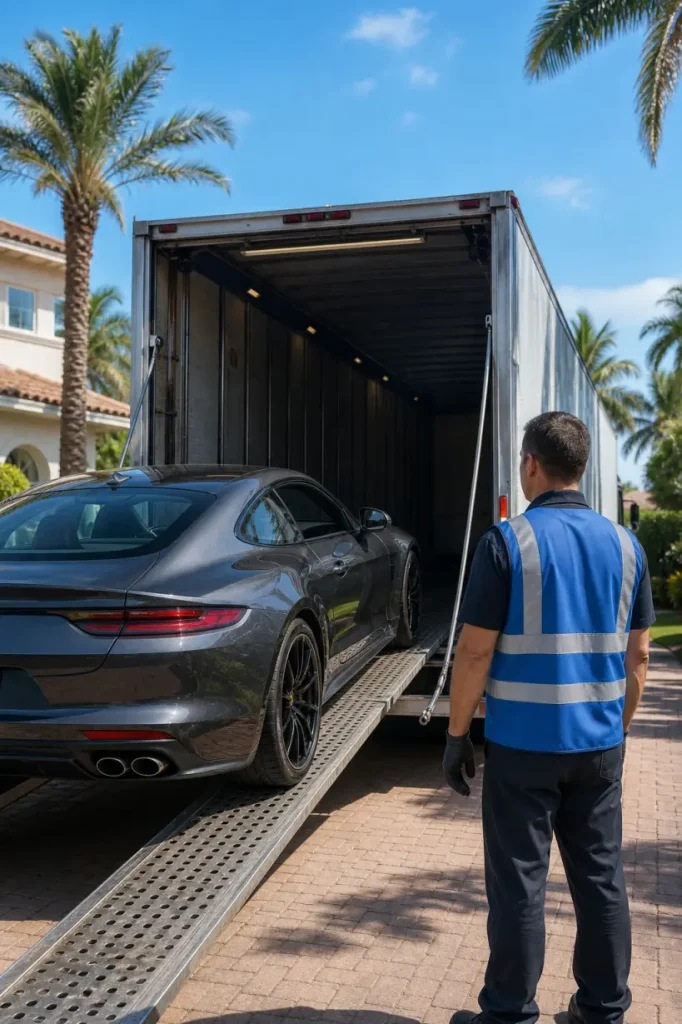
To ship a car from Florida to New York, start with the vehicle details, two workable handoffs and a realistic date window. A pickup in Pompano Beach with delivery to New York City needs different access planning from a shipment between Orlando and Buffalo. Give each provider the same information, then compare the written price, pickup arrangements and assigned carrier.
This guide helps you prepare that northbound shipment. For a route quote, use our Florida-to-New-York car shipping service page. If this is your first interstate shipment, the interstate booking checklist explains the wider process.
Build one shipment brief before comparing quotes
Prepare these details before requesting estimates:
- Locations: both ZIP codes and the actual pickup and delivery addresses. Mention gates, restricted streets, parking garages and building loading rules.
- Vehicle: year, make, model and whether it starts, rolls, steers and brakes. Describe modifications, low clearance, damage or other loading concerns.
- Dates: the earliest day the car will be ready, an acceptable pickup window and when someone can receive it in New York.
- Equipment: open or enclosed transport, plus any handling needs the carrier must confirm.
- Contacts: a reachable person at each end, especially if you will travel while the car is in transit.
Identify any flight, lease or work date that cannot move. Explain which dates are flexible and ask what can actually be committed in writing. Arrange your own transportation separately while the car is unavailable.
Confirm truck access at both addresses
Ask the assigned driver to confirm a safe meeting point before arrival. A transport truck may be unable to enter a narrow street, parking garage, low-clearance entrance or gated property. Share entrance instructions and any restrictions with the pickup contact rather than leaving them for collection day.
For New York City delivery, discuss the neighborhood and building access. Door-to-door service still depends on truck access and a safe loading area. If another location is needed, agree on the exact meeting point with the driver and receiving person. Our New York City shipping guide covers that destination more specifically. Apply the same access checks elsewhere in New York.
Choose equipment for your vehicle
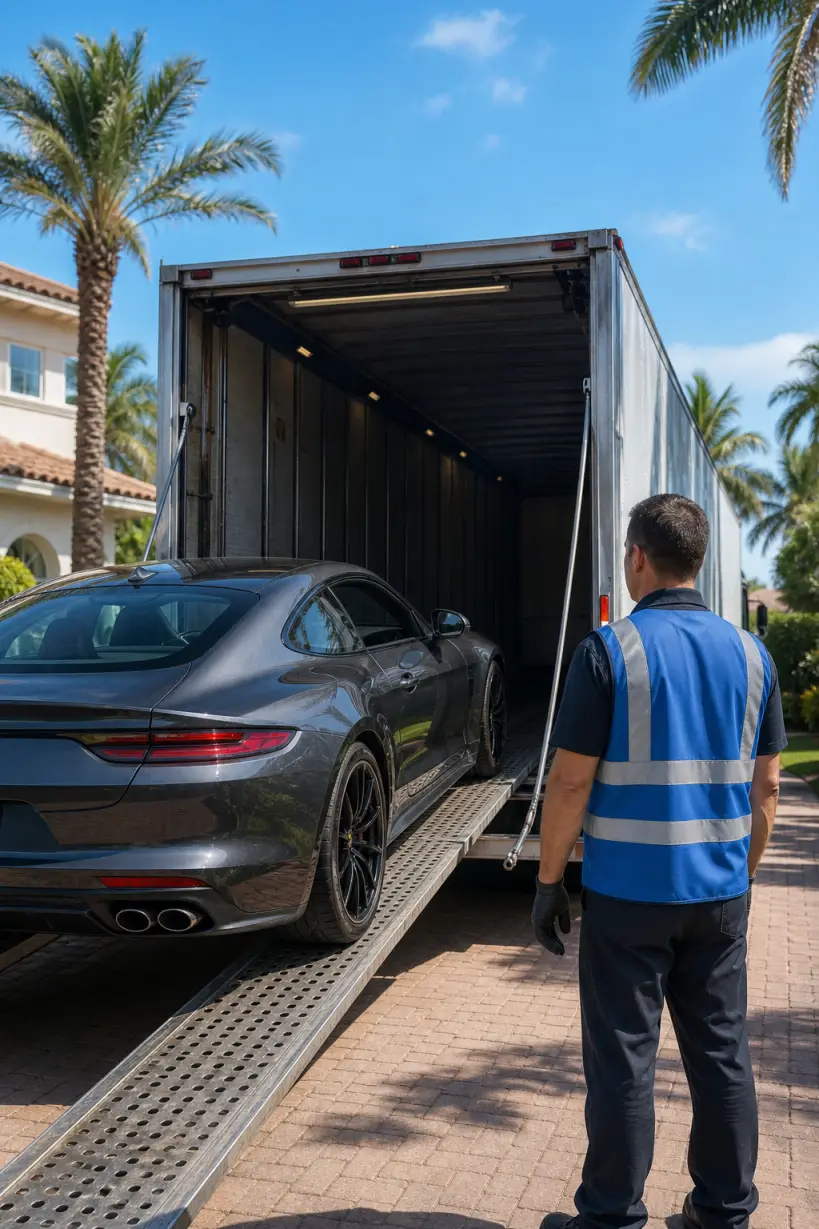
Open transport carries the vehicle on an open trailer; enclosed transport places it inside a trailer. Ask which available equipment fits the vehicle, its clearance and your handling needs. Equipment choice and insurance coverage are separate questions.
If the car does not run, describe whether it can roll, steer and brake. Confirm suitable loading equipment and any additional charge before booking. Do not mark a non-running car as operable simply to obtain a lower estimate.
Get the complete quote and booking terms in writing
Compare offers for the same addresses, vehicle, equipment and date window. Ask what the total includes, how long the estimate remains valid and which changes could affect it. Vehicle size, loading needs, carrier availability, fuel costs and demand on the northbound route can affect an estimate. Ask about current conditions rather than assuming a particular month is always cheapest. See our car shipping costs guide for the broader pricing questions.
Before paying, confirm the payment recipient, deposit and balance milestones, accepted methods, cancellation triggers and any applicable charges. Keep the quote and booking agreement together. Ask what happens if a carrier assignment, pickup window or shipment detail changes; an initial estimate may not contain every final booking term.
Separate the pickup window from road transit
Your earliest ready date, carrier assignment, pickup window, actual loading and estimated delivery are different stages. Ask whether a quoted duration covers road transit only or also includes the wait for collection. Once the car is loaded, confirm the updated arrival estimate and whether any promised date is an estimate or a written commitment.
Before pickup, save both the booking contact and assigned driver’s contact details. Agree on the update channel, whom to contact if an estimate changes and whom to contact if you cannot reach the driver. Tell the receiving person about changes promptly. Do not schedule an inflexible handoff solely from an unconfirmed estimate.

Check the broker, assigned carrier and coverage
A broker arranges transportation; the assigned carrier moves the vehicle. Ask for the legal name and registration details of each. Use the FMCSA automobile-transporter advisory when checking a provider. Our broker-versus-carrier guide explains the booking relationship.
When reading reviews, look for recurring concerns about price changes, missed pickup windows, communication and damage-claim handling. Check dates and whether a review describes a comparable service. Read how the provider responds and ask about the issues that matter to your shipment. One very low quote or one glowing recommendation is not enough to settle the choice.
Request the assigned carrier’s current coverage information. Ask about limits, deductibles, exclusions and the procedure for reporting a problem. If extra protection is offered, ask who provides it and what its separate terms cover. Equipment type and the phrase “fully insured” do not answer those questions.
Prepare the car and ask before packing personal items
Follow the assigned carrier’s instructions for keys, alarms, fuel, toll tags, loose accessories and any vehicle issue. Arrange key access and keep the pickup contact informed. Our car-shipping preparation checklist provides a separate walkthrough.
Ask before leaving personal belongings in the vehicle. Get written permission, restrictions and any applicable coverage limits for personal items. Do not assume an allowance from another company’s website applies to your shipment, or that vehicle coverage also covers the contents. Remove anything the carrier has not approved.
Record the vehicle’s condition at both handoffs
Take clear, dated photos before pickup. Walk around the car with the driver and check that the pickup condition record reflects what you see. Ask which document records the shipment and condition; this is commonly called the bill of lading. Keep your copy and the photos.
At delivery, have the receiving person compare the car with the pickup record and photos before completing the handoff paperwork. Note any discrepancy on the delivery record, keep copies and follow the carrier’s reporting instructions promptly. If weather or poor light makes inspection difficult, discuss a safe inspection arrangement rather than rushing it.
Florida-to-New-York booking questions
Can someone else hand over or receive the car?
Ask what authorization the provider requires. Give the driver that person’s details and make sure the representative can inspect the vehicle, access the keys and complete the paperwork. This is useful when your travel and the car’s journey do not line up.
Can the carrier deliver to my exact address?
Have the assigned driver confirm access. If the property or street is unsuitable, agree on a safe alternate meeting point before delivery day and tell the receiving person where to go.
When should I request a quote?
Request one once your locations, vehicle details and date range are known. Ask about current availability and the booking steps for that shipment. Confirm any urgent or fixed-date requirement explicitly; there is no universal lead time that fits every vehicle and location.
Request a quote with the details that matter
Use our Florida-to-New-York service page to request a route quote. Include both ZIP codes, vehicle condition, equipment preference, date range and access constraints. Then compare the written terms and handoff arrangements using this checklist.